Across Ventura County, from Thousand Oaks to Oxnard, we are seeing a construction boom in backyards. The rise of the Accessory Dwelling Unit (ADU) or “Granny Flat” has homeowners digging trenches to run power, water, and sewer lines to new structures. It is a fantastic way to add value to your property.
However, it is also a minefield.
When you break ground in a backyard that has been established for 30 or 40 years, you are digging into the unknown. The original blueprints for your home rarely show the “aftermarket” additions previous owners made. That gas line running to the barbecue island? The electrical conduit for the garden lights? The PVC drain line for the pool overflow? None of these are on the city maps.
Striking one of these private utility lines can turn a profitable construction project into a financial disaster. It causes project delays, expensive emergency repairs, and potential safety hazards for your crew. The only way to dig with confidence is to map the invisible infrastructure first.
Public vs. Private: Knowing Where the City Stops
There is a dangerous misconception among homeowners that calling “811” (DigAlert) covers everything. It does not.
811 only locates public utilities. They will mark the power line from the street to your meter, and the water line from the street to your meter. Once that line crosses the meter and enters your private property, 811 stops. They will not mark the line running from your house to your garage, or from your main panel to your pool pump.
This “private utility” gap is where 90% of backyard excavation accidents happen. You are responsible for everything past the meter. If your contractor hits a gas line while trenching for the ADU foundation, you are liable for the repair cost and potentially for the fire department response.
According to the Common Ground Alliance (CGA), the failure to locate private utilities is a leading cause of damages in residential construction projects. The cost of a professional locate is a fraction of the cost of repairing a severed fiber optic cable or a crushed sewer lateral.
The Plastic Challenge in Renovation
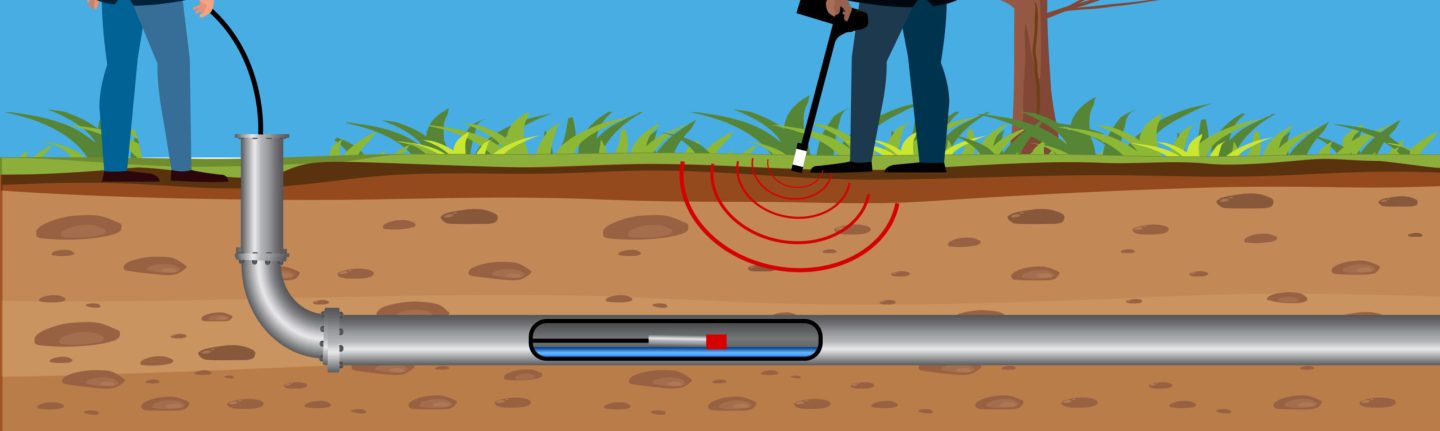
Modern renovations face a specific challenge: PVC. In the past, most pipes were metal, which are easy to find with standard electromagnetic tools. Today, most private water, sewer, and irrigation lines are plastic.
Plastic is non-conductive. You can’t hook a wire to it and send a signal. This leaves many contractors guessing. “I think the pipe runs straight from the pool to the pump,” they say. But pipes rarely run in straight lines. They snake around trees, dodge old patios, and take erratic paths.
Quest Leak Detection utilizes Ground Penetrating Radar (GPR) and Acoustic Pipe Locating to solve this. GPR sends radar pulses into the soil that bounce off the differing densities of materials. It can “see” a PVC pipe or a concrete duct bank just as easily as it sees a metal pipe. It provides a visual cross-section of the earth, allowing us to map the depth and direction of obstructions that metal detectors simply ignore.
Protecting the “Project Critical” Path
In commercial construction or large residential projects, time is money. If a crew hits a water main, the job site shuts down. The trench floods, walls collapse, and the schedule slips by days or weeks while you wait for repairs.
We offer “Utility Mapping” services that go beyond just spray paint on the grass. We can provide a clear picture of the underground network. This allows architects and engineers to design around the utilities.
For example, if we locate a main sewer line running exactly where you planned to pour the ADU foundation, you have the data to shift the foundation three feet to the left before you pour concrete. That simple shift saves thousands of dollars in sewer relocation costs.
Safety for Your Crew
Beyond the budget, this is a safety issue. Hitting an electrical conduit with a backhoe or a jackhammer can be fatal. Hitting a pressurized gas line can cause an explosion.
As a property owner or general contractor, you have a duty of care to provide a safe work environment. Relying on old, inaccurate “as-built” drawings is negligence. Bringing in a private utility locator demonstrates due diligence. Construction Dive reports that job sites that utilize private locating services have significantly lower accident rates and lower insurance claims than those that rely solely on 811.
Your Ventura County Experts for Advanced PVC Utility Location
Map it before you dig it. Protect your investment and your workers with precision locating.
Quest Leak Detection uses the latest GPR and acoustic technology to find what 811 misses. Visit our Advanced PVC Utility Location page to secure your job site, or Contact Us to schedule a survey.