
Living in Ventura County means living with the reality of earthquakes. We prepare our emergency kits, bolt our bookcases to the walls, and teach our children to “drop, cover, and hold on.” But there is one crucial element of earthquake preparedness that is often overlooked until the ground starts shaking: your natural gas lines.
In the history of major California earthquakes, a significant portion of the damage didn’t come from the shaking itself, but from the fires that followed. Rigid steel gas pipes are not designed to move. When the earth shifts violently, these pipes can shear, threaded connections can loosen, and appliances can tip over, severing flex lines.
The result is a highly volatile situation where gas is pumping into a damaged structure that likely has exposed electrical wires sparking nearby. For homeowners, understanding the intersection of seismic activity and gas plumbing is not alarmist; it is an essential part of responsible property ownership.
The Physics of Failure: Rigid Pipes vs. Moving Earth
Most homes in our area are piped with black iron or galvanized steel gas lines. These materials are incredibly strong, but they are brittle. They have very little “give.”
During a seismic event, your house moves. Ideally, it moves as a single unit. However, the ground often moves at a different frequency than the structure, and the appliances (like heavy water heaters) might move independently if not properly strapped.
This differential movement creates shear force. The most common failure points are:
- The Meter Connection: Where the municipal line meets your home’s system.
- Elbows and Joints: Threaded connections can unscrew or snap under torsion.
- Appliance Flex Lines: If a stove or dryer slides just a few inches, it can pull the flexible connector apart, releasing a full-pressure stream of gas into the room.
According to the California Seismic Safety Commission, securing water heaters and ensuring flexible gas connections are the two highest-value steps a homeowner can take to prevent post-earthquake fires.
The First Line of Defense: Seismic Shut-Off Valves
You cannot predict when an earthquake will hit, and you might not be home when it does. This is why an Earthquake Shut-Off Valve (also known as a Seismic Gas Shut-Off Valve) is a critical piece of technology.
These devices are installed on your gas meter. Inside the valve, a metal ball sits on a pedestal. When a shaker of a magnitude 5.1 or greater occurs, the vibration knocks the ball off the pedestal, dropping it into the gas line and instantly blocking the flow of gas into your home.
This is a passive safety system. It works whether you are asleep, at work, or on vacation. It prevents the house from filling with gas while you are unable to reach the manual shut-off wrench. Many insurance companies offer discounts for homes equipped with these valves, and they are increasingly required during real estate transactions in California.
Post-Quake Protocol: The Danger of “Turning It Back On”
If your seismic valve trips during a quake, or if you manually turn off your gas at the meter because you smelled a leak, do not turn it back on yourself.
This is a cardinal rule of gas safety. If the flow of gas was stopped, it means the pressure in the lines dropped. If there is a crack in a pipe inside your wall, turning the valve back on will re-pressurize that leak, filling your walls with explosive gas.
Furthermore, pilot lights on older appliances will have gone out. Turning the gas on without re-lighting them properly can lead to dangerous accumulation.
After an event, you need a professional gas leak detection and pressure test. A licensed technician will attach a gauge to your system and pump it full of air (not gas) to see if it holds pressure. If the needle drops, there is a leak that must be found and fixed before the gas company restores service. The U.S. Geological Survey (USGS) advises that once the gas is off, it should only be turned back on by a qualified professional after a thorough inspection.
Inspecting for “Silent” Loosening
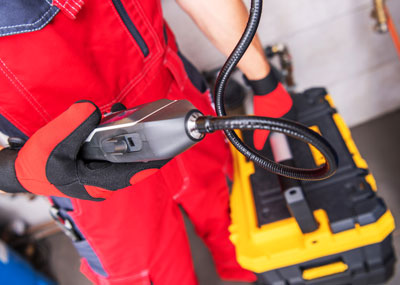
Even small tremors that don’t cause major damage can loosen plumbing over time. We recommend an annual gas line inspection for older homes. We use sensitive electronic sniffers to check the joints in your attic, crawlspace, and behind appliances.
We often find small “micro-leaks” at threaded unions that have vibrated loose over decades. Tightening these up and ensuring your system is sealed tight gives you the best chance of weathering the next “Big One” safely.
Your Ventura County Experts for Gas Leak Detection
Don’t wait for the ground to shake to think about your gas lines. Secure your home with seismic valves and professional inspections.
Quest Leak Detection specializes in gas safety, seismic retrofitting, and emergency leak location. Visit our Gas Leak Detection page to learn more about protecting your home from earthquake-related gas fires, or Contact Us to schedule a safety check.