
In the beautiful, coastal communities of Ventura County, we often associate home maintenance with things like landscaping, roof repairs, or perhaps cleaning the gutters before the rainy season. However, there is a critical infrastructure hidden within our walls and under our floors that demands absolute respect: our natural gas lines.
Natural gas is a clean, efficient, and powerful energy source that heats our water, cooks our food, and warms our homes. But when it escapes its containment, it transforms from a utility into a deadly hazard. Gas leaks are deceptively dangerous because they are often silent and invisible. While catastrophic explosions make the evening news, the more common reality is the slow, low-level leak that sickens a family over weeks or months, or the sudden rupture that requires immediate evacuation.
For homeowners, the key to safety is awareness. You cannot rely on seeing a leak; you must rely on your other senses and a distinct knowledge of the warning signs. Understanding the nature of natural gas—and knowing exactly what to do when you suspect a leak—is not just about protecting your property; it is about protecting your life.
The Science of the Smell: Mercaptan
Natural gas (methane) in its raw state is completely odorless and colorless. This presents a massive safety problem: how do you detect an invisible killer? To solve this, utility companies add a chemical called mercaptan to the gas supply. This chemical contains sulfur and is responsible for that distinct “rotten egg” or “sulfur” smell associated with gas leaks.
This smell is your first line of defense. However, “olfactory fatigue” is a real phenomenon. If you are exposed to a smell for a long period, your nose stops registering it. This means you might smell gas when you first walk in the door, but five minutes later, you think the smell is gone. It hasn’t gone; your brain has just tuned it out.
If you catch even a whiff of that rotten egg odor, do not second-guess yourself. Do not assume it is the garbage disposal or a skunk outside. Immediate action is required. SoCalGas explicitly advises customers to leave the premises immediately if they suspect a leak and to call for help from a safe distance, rather than trying to investigate the source themselves.
Physical Symptoms: When Your Body Warns You
Sometimes, a leak is located in an area where the smell doesn’t accumulate noticeably, or perhaps the wind dissipates the odor. In these cases, your body might react before your nose does.
Natural gas exposure causes a displacement of oxygen in the blood. The symptoms often mimic the flu, leading many people to misdiagnose themselves. Common warning signs include:
- Unexplained Headaches: A sudden, throbbing headache that occurs when you are at home but dissipates when you leave.
- Dizziness and Nausea: Feeling lightheaded or sick to your stomach for no apparent dietary reason.
- Fatigue: Extreme tiredness or drowsiness.
- Breathing Difficulties: Shortness of breath or chest tightness.
If your pets are acting strangely—lethargic, vomiting, or refusing to eat—this is often a canary-in-the-coal-mine situation. Animals are smaller and more sensitive to air quality changes than humans. According to the Mayo Clinic, carbon monoxide poisoning (which often accompanies gas appliance malfunctions) shares many of these symptoms, making professional detection vital to determine the exact cause of the illness.
The “Don’t Do” List
If you suspect a leak, your instincts might actually put you in danger. We are programmed to “fix” things, but with gas, trying to fix it can trigger a disaster.
Do NOT flip light switches: Flipping a switch on or off creates a tiny electrical arc inside the wall switch. In a gas-saturated room, this tiny spark is enough to cause an explosion. Do NOT use your phone: Do not make calls from inside the house. Even the battery signal can be an ignition source. Do NOT try to shut off the valve nearby: If the leak is at the appliance, trying to reach behind a stove or water heater puts you right in the blast zone.
The only correct action is to evacuate everyone (including pets) to a safe distance upwind and call 911 or the gas company. Once the immediate danger is neutralized by emergency services, you need a specialized leak detection company to pinpoint the exact location of the breach for repair. Emergency responders will turn off the gas, but they generally do not repair the pipes inside your walls.
Precision Detection Saves Walls
Once the gas is off, the hunt begins. In the past, plumbers might have had to tear open drywall blindly, following the pipe until they found the issue. This caused massive unnecessary damage to the home.
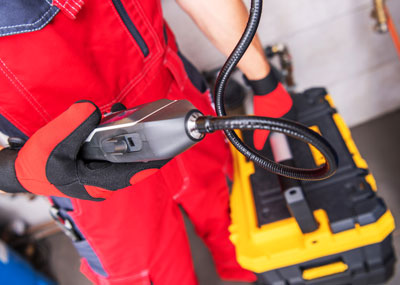
Modern gas leak detection is non-invasive. We use sensitive electronic “sniffers” that can detect gas molecules in the parts per billion range. We also pressure test the lines with inert air to isolate the specific section of plumbing that has failed. This allows us to make a surgical repair—opening only the exact spot where the leak is—saving you thousands in reconstruction costs.
Your Ventura County Experts for Gas Leak Detection
Gas safety is not a DIY project. When the safety of your family is on the line, trust the experts who have the tools and training to find the leak fast.
Quest Leak Detection uses industry-leading technology to pinpoint gas hazards with zero guesswork. Visit our Gas Leak Detection page to learn about our safety protocols, or Contact Us immediately for emergency service.